
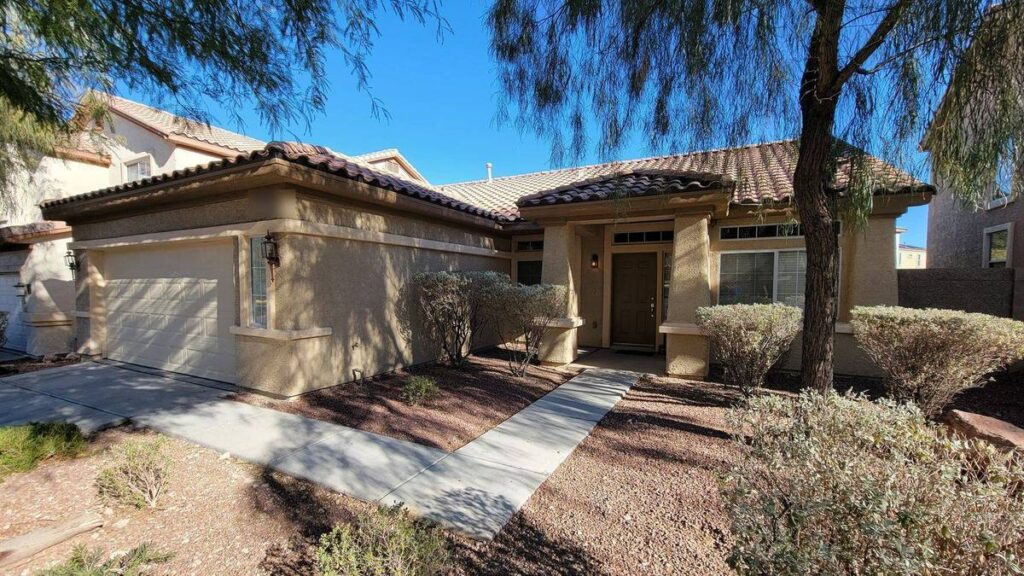
In Las Vegas, the best time to paint a house exterior is mid-March through May and mid-September through November, when daytime highs sit in the 70s and 80s and surface temperatures stay inside the manufacturer’s recommended range. Painting in July or August is possible, but it has to be scheduled around the sun, not around the calendar. Here is how we approach it after painting Valley homes since 2011.
Why Timing Matters More Here Than Almost Anywhere Else
Paint does not care about the air temperature on your phone. It cares about the surface temperature of your stucco. On a 108°F August afternoon, a south- or west-facing stucco wall in Henderson can easily read 140°F or higher with an infrared thermometer. Sherwin-Williams exterior coatings are generally rated for application up to about 90–100°F surface temperature.
Above that, the water in the paint flashes off before the resin can level and form a continuous film. What you get is a coating that looks fine the week it goes on and then fails early — poor adhesion, roller lap marks that never disappear, and premature chalking. That is the root cause behind a lot of the “my house was painted three years ago and it already looks bad” calls we get.
The Two Prime Windows for Exterior Painting in Las Vegas
Spring: mid-March to late May
The best all-around window. Mild temperatures, low humidity, long dry stretches. The main variable is wind — Valley spring afternoons can gust hard, which is a real problem for spray application and for keeping overspray off your neighbor’s cars. Good crews spray early and roll or back-brush later in the day when it picks up.
Fall: mid-September to late November
Our favorite window, and the one most homeowners overlook. The heat breaks, the wind calms down, and the monsoon has passed. October in particular is close to ideal. The catch is that everyone books it, so calling in August for October work is smart planning rather than early planning.
What About Summer? And Winter?
Neither is off the table — both just require adjustments.
- Summer (June–September): workable if the crew chases shade — starting at sunrise on the west wall, moving to the east wall in the afternoon, and never painting a wall in direct sun. Add monsoon season: an afternoon storm on fresh coating can wash it right off the wall. Most exterior coatings need roughly 4–6 hours of rain-free cure time.
- Winter (December–February): Valley days often hit the 60s and are perfectly paintable, but nights drop into the 30s. The real limit is the low temperature over the next several hours after application — most acrylics require 50°F and falling no further. That usually means stopping by 2:00 p.m. so the coating can set before the temperature drops.
Quick Reference
| Season | Rating | Main Constraint |
|---|---|---|
| Spring (Mar–May) | Excellent | Afternoon wind |
| Summer (Jun–Sep) | Workable | Surface heat, monsoon storms |
| Fall (Sep–Nov) | Excellent | Books up fast |
| Winter (Dec–Feb) | Good | Overnight lows, short work day |
Fix the Stucco First — Season Doesn’t Change That
The single biggest predictor of how long a Las Vegas exterior paint job lasts is not the season. It is whether the substrate was repaired and sealed properly first. Hairline cracks in stucco open and close with our 40-degree daily temperature swings, and paint alone will never bridge them. They need to be routed, patched, and cured before any coating goes on.
If you are seeing cracking, spalling, or soft spots, handle the stucco repair first and let the patch cure — typically 7 to 14 days before painting. Our full walkthrough on stucco surface prep before exterior painting covers what proper prep actually looks like. And if you are unsure whether your cracks are cosmetic or structural, we broke that down in this guide to reading stucco cracks.
How to Plan Your Repaint Around the Calendar
Work backward from the window you want. For an October repaint: get estimates in July or August, schedule any stucco or drywall repair for late August, allow two weeks of cure time, and paint in early October. If your HOA requires color approval — standard across most Summerlin, Anthem, and Green Valley communities — add 30 to 45 days for the architectural review committee. That approval timeline is what causes most missed windows, not crew availability.
Commercial properties and HOA common areas have the opposite problem: summer is often the easiest time to work because occupancy is lower. We schedule commercial repaints around business hours year-round.
If summer is your only option and the exterior has to wait, it is a good time to move indoors. Interior painting and cabinet refinishing are climate-controlled work with no seasonal constraint at all.
FAQ
Can you paint a house exterior in Las Vegas in July?
Yes, but only with shade-following scheduling and surface temperature checks. Reputable crews start at sunrise and stop mid-afternoon. If a contractor offers to spray your west wall at 2:00 p.m. in July, keep looking.
How long does exterior paint last in Las Vegas?
Properly prepped stucco with quality acrylic typically holds 7 to 10 years here. South- and west-facing walls fade fastest because of UV exposure. See our guide on how often to repaint in Las Vegas.
Does rain during monsoon season ruin fresh exterior paint?
Only within the cure window. Most exterior acrylics need about 4 to 6 hours rain-free. Beyond that, rain is harmless — and it is why we watch the forecast daily during July and August rather than booking blind.
Ready to Book Your Window?
New Visions Painters has been a family-owned, licensed and insured Las Vegas painting company since 2011. We use premium Sherwin-Williams coatings and back our work with a 5-year warranty. We serve Las Vegas, Henderson, Summerlin, North Las Vegas, and surrounding areas.
Call (702) 578-5759 for a free, no-pressure estimate — and if you are targeting the fall window, now is the time to get on the calendar.
 New Visions